
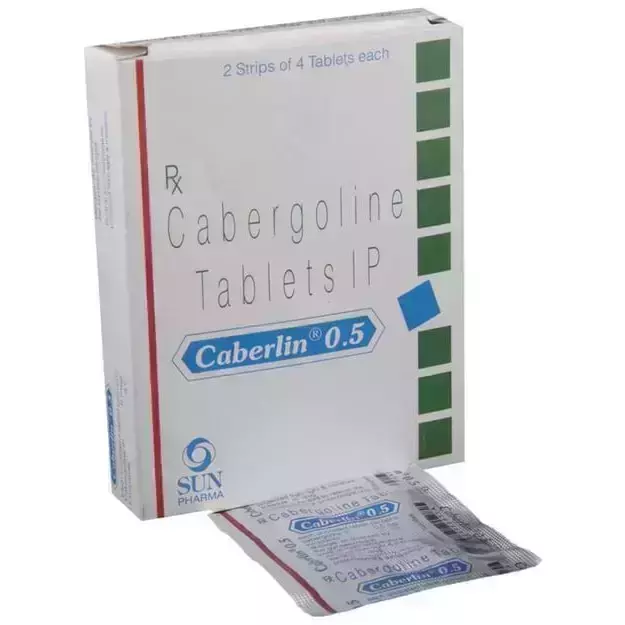

What is Cabgolin 0.5 mg?
Cabgolin 0.5 mg is a medication that contains cabergoline, a dopamine receptor agonist. It is primarily used to treat conditions related to hyperprolactinemia, a disorder characterized by high levels of prolactin hormone in the blood. It is manufactured by Sun Pharmaceutical Industries Ltd.
What are the Uses of Cabgolin 0.5 mg?
Treatment of hyperprolactinemia (high prolactin levels)
Management of prolactin-secreting pituitary tumors (prolactinomas)
Restoration of normal menstrual cycles in women with prolactin-related irregularities
Treatment of infertility caused by high prolactin levels
Prevention of lactation (milk production) in certain medical situations (off-label)
What are the Benefits of Cabgolin 0.5 mg?
Helps normalize prolactin levels
Promotes ovulation and fertility
Reduces symptoms like menstrual irregularities, galactorrhea (unexpected milk flow), and sexual dysfunction
Can shrink pituitary adenomas
Generally well-tolerated with once or twice-weekly dosing
How Does Cabgolin 0.5 mg Work?
Cabgolin contains cabergoline, which mimics dopamine, a natural brain chemical. It binds to dopamine D2 receptors in the pituitary gland and inhibits the secretion of prolactin. This reduces prolactin levels and alleviates symptoms associated with hyperprolactinemia.
How to Take Cabgolin 0.5 mg?
Take exactly as prescribed by your doctor.
Usually taken once or twice a week.
Can be taken with or without food, preferably at the same time each dose.
Swallow whole with water; do not crush or chew.
Dosage of Cabgolin 0.5 mg
Initial dose: Typically 0.25 mg twice a week
Adjustment: Dose may be increased gradually (by 0.25 mg twice weekly every 4 weeks)
Maintenance dose: Based on prolactin levels, usually 0.25–1 mg per week, sometimes up to 1.5–2 mg/week
Important: Always follow your doctor’s instructions for dosage.
Missed Dose and Overdose
Missed Dose:
Take it as soon as you remember.
If it’s almost time for your next dose, skip the missed one.
Do not double the dose.
Overdose Symptoms:
Nausea, vomiting
Hallucinations, confusion
Low blood pressure, dizziness
Seek immediate medical attention in case of suspected overdose.
What are the Available Strengths of Cabgolin?
Cabgolin 0.25 mg
Cabgolin 0.5 mg (most commonly prescribed)
Side Effects of Cabgolin 0.5 mg
Common Side Effects:
Nausea or vomiting
Headache
Constipation
Fatigue
Serious Side Effects (seek medical help):
Psychiatric symptoms (hallucinations, impulsive behaviors)
Shortness of breath, chest pain
Swelling in legs
Vision problems
Interactions of Cabgolin 0.5 mg
Antipsychotics (e.g., haloperidol, risperidone) may reduce effectiveness.
Macrolide antibiotics (e.g., erythromycin) can increase cabergoline levels.
Blood pressure medications may interact and lower blood pressure excessively.
Avoid alcohol—may increase dizziness or drowsiness.
Precautions of Cabgolin 0.5 mg
Not for use during pregnancy or breastfeeding unless advised
Caution in patients with heart, liver, or psychiatric disorders
Monitor blood pressure regularly
Inform your doctor of any history of valve disease (echocardiogram may be recommended)
Storage Information
Store at room temperature (15–30°C)
Keep away from moisture, heat, and light
Keep out of reach of children
Availability in the US and Australia
Cabgolin is a brand mainly available in India and other international markets.
In the US and Australia, the generic cabergoline is available and FDA/TGA-approved.
Prescription required.
Frequently Asked Questions (FAQs)
1. How long does Cabgolin take to work?
It may take several weeks to normalize prolactin levels, depending on the condition and dosage.
2. Can Cabgolin improve fertility?
Yes, by lowering prolactin levels, it can restore ovulation and improve fertility.
3. Can I stop taking Cabgolin if I feel better?
No. Always consult your doctor before stopping. Stopping early may cause prolactin to rise again.
4. Is Cabgolin habit-forming?
No, but it may cause behavioral changes in rare cases, such as compulsive behavior.
5. Can men use Cabgolin?
Yes, it can be prescribed to men with high prolactin levels, erectile dysfunction, or pituitary tumors.




Reviews
There are no reviews yet.