
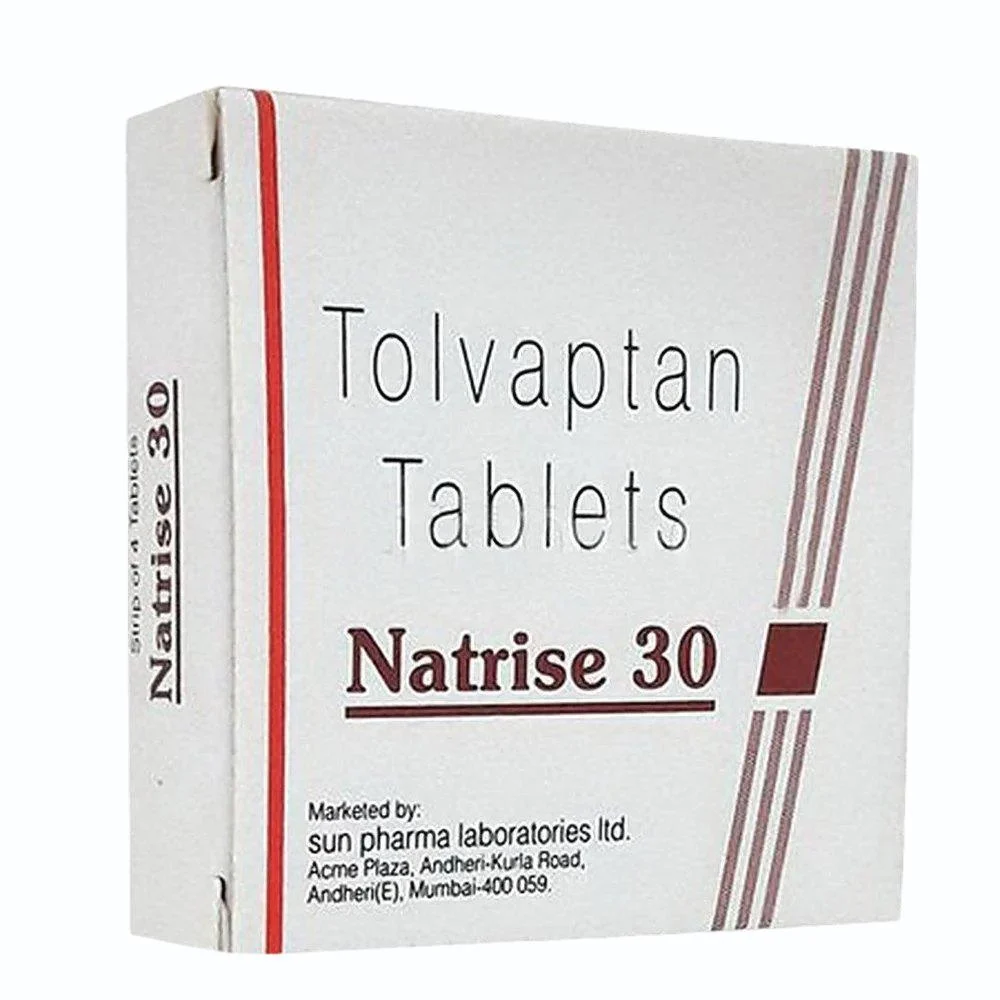
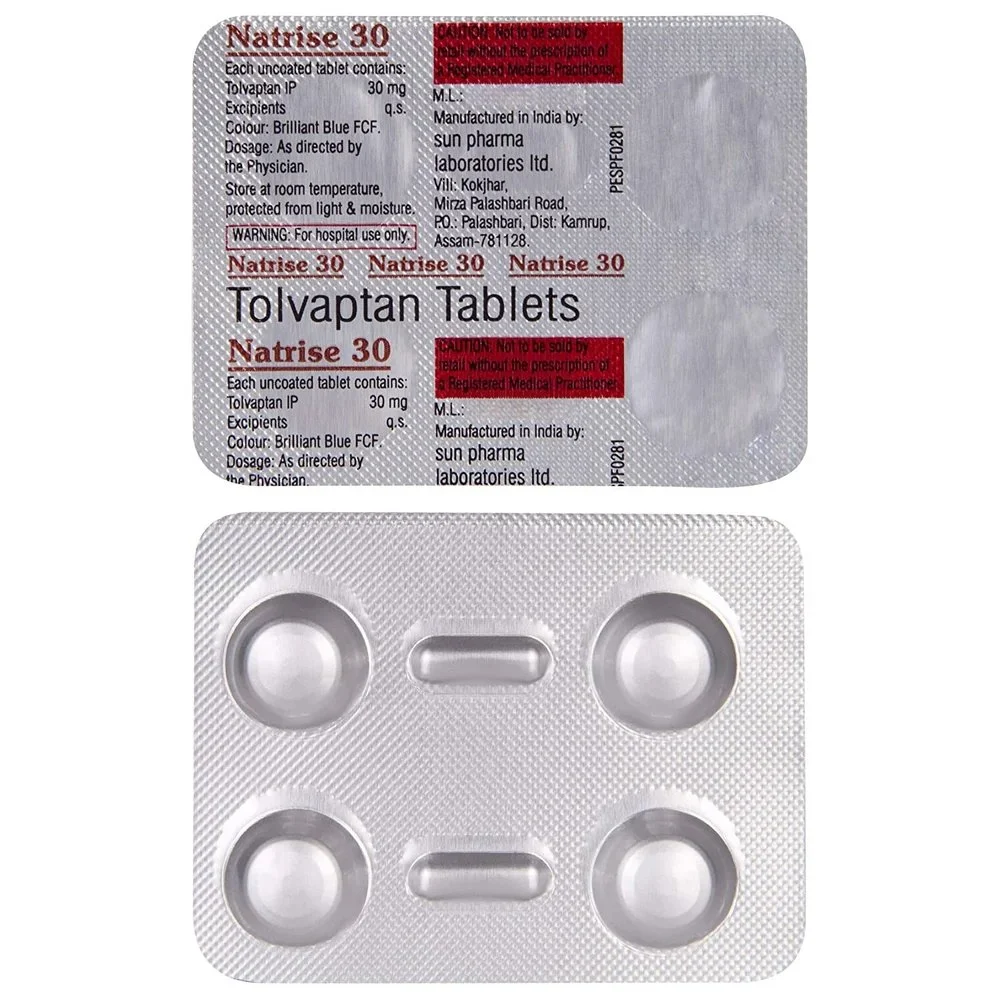

What is Natrise 30 mg?
Natrise 30 mg is a prescription medication that contains Tolvaptan, a vasopressin V2 receptor antagonist. It is primarily used to treat hyponatremia (low blood sodium levels), especially in conditions like SIADH (Syndrome of Inappropriate Antidiuretic Hormone Secretion), heart failure, and liver cirrhosis. Tolvaptan promotes the excretion of free water without significant loss of sodium or potassium, thereby increasing serum sodium levels.
What are the Uses of Natrise 30 mg (Tolvaptan)?
Natrise 30 mg is prescribed for:
Hyponatremia (low sodium levels in the blood), especially when it is euvolemic or hypervolemic
Treatment of SIADH (Syndrome of Inappropriate Antidiuretic Hormone Secretion)
Management of chronic heart failure-related hyponatremia
Off-label use in autosomal dominant polycystic kidney disease (ADPKD) to slow kidney function decline
What are the Benefits of Natrise 30 mg (Tolvaptan)?
Corrects low sodium levels effectively and safely
Reduces symptoms such as confusion, nausea, muscle cramps, and fatigue caused by hyponatremia
Helps prevent complications of chronic low sodium, like brain swelling or neurological damage
In ADPKD, may slow cyst growth and preserve kidney function (off-label or under specific guidelines)
How Does Natrise 30 mg Work?
Tolvaptan is a vasopressin V2 receptor antagonist. It works by:
Blocking the action of antidiuretic hormone (ADH) in the kidneys
Promoting the excretion of free water (aquaresis) without losing electrolytes
Increasing plasma sodium concentration by reducing fluid overload
How to Take Natrise 30 mg (Tolvaptan)?
Dosage Form: Oral tablet
Route: By mouth, with or without food
Administration: Swallow the tablet whole with water; do not crush or chew
Fluid Intake: You may need to limit fluid intake as directed by your doctor
Dosage of Natrise 30 mg (Tolvaptan)
Starting dose: Usually 15 mg once daily
Maintenance: Can be increased to 30 mg or 60 mg daily based on response and sodium levels
ADPKD (off-label): Often initiated under specialized care with close monitoring
Note: Always follow your healthcare provider’s specific instructions.
Missed Dose and Overdose
Missed Dose: Take it as soon as remembered unless it’s almost time for the next dose. Do not double dose.
Overdose: May cause excessive water loss, dehydration, or electrolyte imbalance. Seek immediate medical help.
Available Strengths of Natrise (Tolvaptan)
Natrise 15 mg
Natrise 30 mg
Side Effects of Natrise 30 mg
Common Side Effects:
Thirst and dry mouth
Frequent urination
Weakness or dizziness
Serious Side Effects:
Dehydration
Hypernatremia (high sodium)
Liver injury (especially in long-term use for ADPKD)
Increased blood sugar
Hypotension (low blood pressure)
Interactions of Natrise 30 mg
Natrise may interact with:
Strong CYP3A inhibitors (e.g., ketoconazole, ritonavir) – may increase blood levels of Tolvaptan
CYP3A inducers (e.g., rifampin, phenytoin) – may reduce effectiveness
Diuretics – may enhance risk of dehydration
Grapefruit juice – may increase drug concentration
Precautions for Natrise 30 mg
Not for use in hypovolemic hyponatremia (sodium loss due to fluid loss)
Monitor liver function regularly (ALT, AST, bilirubin)
Avoid if you have liver disease, anuria, or dehydration
Do not take with excessive fluid restriction unless advised
Storage Information
Store below 25°C (77°F)
Keep away from moisture and sunlight
Keep out of reach of children
Availability in the US and Australia
USA: Available under the brand name Samsca (Tolvaptan)
Australia: Tolvaptan is available with prescription; may be prescribed under authority for conditions like hyponatremia or ADPKD
Frequently Asked Questions (FAQs)
Q1. Is Natrise 30 mg safe for long-term use?
For short-term hyponatremia, yes. Long-term use (e.g., in ADPKD) requires liver function monitoring due to risk of hepatotoxicity.
Q2. How fast does Natrise work?
Serum sodium levels often begin to improve within 4 to 8 hours of the first dose.
Q3. Can I drink fluids while on Natrise?
You should limit fluid intake to prevent overcorrection of sodium. Your doctor will guide you.
Q4. Can Natrise be used in children?
No. It is not recommended for pediatric use.
Q5. Is liver monitoring necessary?
Yes, especially if used beyond 30 days or for ADPKD. Routine liver function tests are advised.
Lorem ipsum dolor sit amet, consectetur adipiscing elit. Ut elit tellus, luctus nec ullamcorper mattis, pulvinar dapibus leo.



Reviews
There are no reviews yet.